


Over the years, the production technology of Fdy Yarn has witnessed a remarkable evolution, shaping the textile industry in profound ways. As a supplier of Fdy Yarn, I have had the privilege of witnessing these changes firsthand and adapting our production processes to meet the ever - changing demands of the market.
Early Beginnings of Fdy Yarn Production
In the early days, the production of Fdy (Fully Drawn Yarn) was a relatively rudimentary process. The concept of creating a yarn that was fully drawn during the spinning process was in its infancy. The basic raw material for Fdy Yarn is polyester, which was first synthesized in the 1940s. Initially, the production of polyester yarns, including Fdy Yarn, was focused on achieving basic functionality.
The early production technology involved melting polyester chips at high temperatures. These chips were then extruded through spinnerets, which are small holes in a metal plate. The extruded filaments were then cooled rapidly in a quenching chamber. However, the drawing process was not as refined as it is today. The filaments were drawn using simple mechanical systems, which often led to inconsistent yarn quality. There were variations in thickness, strength, and elongation of the yarn, which limited its applications.
Advancements in Polymerization
One of the first major breakthroughs in Fdy Yarn production technology was in the area of polymerization. Polymerization is the process of combining small molecules (monomers) to form large molecules (polymers). In the case of polyester, the monomers are terephthalic acid and ethylene glycol.
Scientists and engineers developed new catalysts and reaction conditions that allowed for more precise control over the polymerization process. This led to the production of polyester polymers with more uniform molecular weights. Polymers with uniform molecular weights result in yarns with better mechanical properties. The yarns are stronger, more resistant to abrasion, and have more consistent dye - uptake. These improvements in polymerization technology were a significant step forward in the production of high - quality Fdy Yarn.
Precision Spinning and Drawing Technologies
As the demand for higher - quality Fdy Yarn increased, manufacturers focused on improving the spinning and drawing processes. Modern spinning machines are equipped with advanced control systems that can precisely regulate the temperature, pressure, and speed of the extrusion process. This ensures that the filaments are extruded with a high degree of uniformity.
The drawing process has also seen significant advancements. Instead of simple mechanical drawing systems, modern production facilities use multi - stage drawing units. These units can apply different levels of tension to the filaments at different stages of the drawing process. This allows for better control over the orientation of the polymer chains within the filaments. When the polymer chains are properly oriented, the yarn has improved strength, elasticity, and dimensional stability.
Integration of Automation and Digitalization
The integration of automation and digitalization has revolutionized Fdy Yarn production. Automated systems can monitor and control every aspect of the production process, from the feeding of raw materials to the final winding of the yarn. Sensors are used to measure parameters such as temperature, pressure, and yarn tension in real - time. Any deviations from the set parameters can be detected immediately, and the system can adjust itself accordingly.
Digitalization has also enabled better quality control. Advanced software can analyze data from the production process and identify trends and patterns. This allows manufacturers to predict potential quality issues and take preventive measures. For example, if the software detects a gradual increase in yarn thickness over time, the production process can be adjusted before the yarn goes out of specification.
Environmental Considerations and Sustainable Production
In recent years, there has been a growing emphasis on environmental sustainability in the textile industry. Fdy Yarn production is no exception. Manufacturers are now looking for ways to reduce the environmental impact of their production processes.
One approach is the development of recycling technologies. Polyester waste can be recycled and used as raw material for Fdy Yarn production. Recycling not only reduces the amount of waste going to landfills but also conserves natural resources. Additionally, new production processes are being developed that use less energy and water. For example, some manufacturers are using closed - loop systems that recycle water used in the production process, reducing water consumption significantly.
Applications of Modern Fdy Yarn
The evolution of Fdy Yarn production technology has opened up a wide range of applications. The high - quality and consistent properties of modern Fdy Yarn make it suitable for a variety of industries.
In the textile industry, Fdy Yarn is used in the production of Polyester Fabric Yarn. It is used to make clothing, home textiles, and industrial fabrics. The yarn's strength and durability make it ideal for outdoor clothing and sportswear. In home textiles, it is used in curtains, bedsheets, and upholstery due to its resistance to wrinkles and stains.

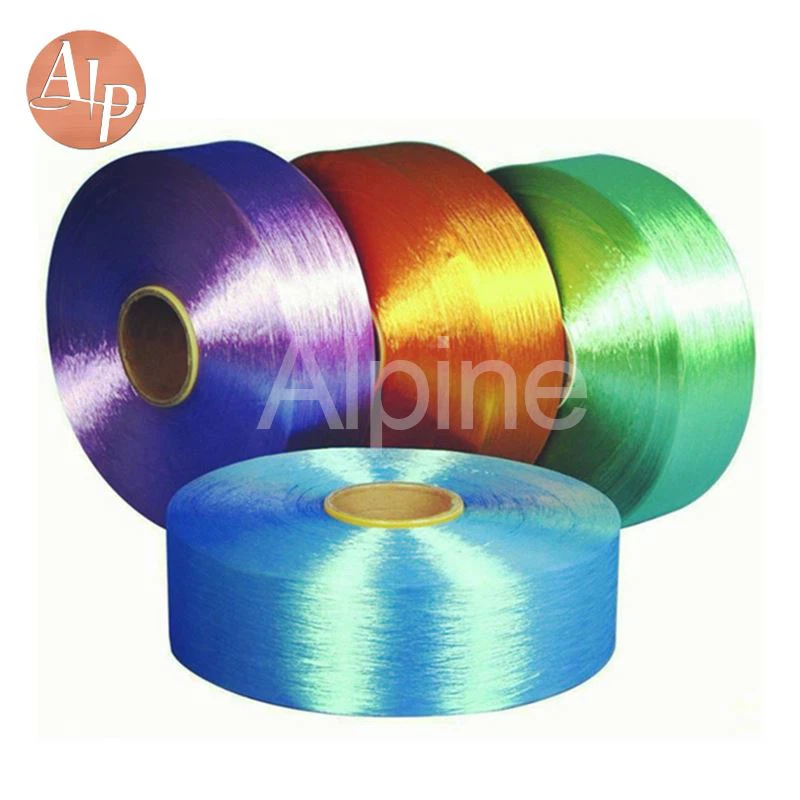
In the industrial sector, Fdy Yarn is used in the production of tire cords, conveyor belts, and geotextiles. Its high strength and dimensional stability make it a reliable material for these applications.
The Future of Fdy Yarn Production Technology
Looking ahead, the future of Fdy Yarn production technology is likely to be shaped by several trends. One of these trends is the continued development of sustainable production methods. As consumers become more environmentally conscious, there will be an increasing demand for Fdy Yarn produced using sustainable processes.
Another trend is the development of smart yarns. Smart yarns are yarns that can sense and respond to external stimuli. For example, they can change color in response to temperature or humidity, or they can conduct electricity. These smart yarns could have applications in areas such as wearable technology, medical textiles, and smart home textiles.
As a supplier of Fdy Yarn, we are committed to staying at the forefront of these technological advancements. We invest in research and development to improve our production processes and offer our customers the highest - quality products.
Why Choose Our Fdy Yarn
Our Fdy Yarn is produced using the latest technologies and highest - quality raw materials. We have a state - of - the - art production facility that is equipped with advanced spinning, drawing, and quality control systems. Our products are known for their excellent mechanical properties, uniform quality, and consistent dye - uptake.
We offer a wide range of Polyester Fabric Yarn options to meet the diverse needs of our customers. Whether you are in the fashion industry, home textiles, or industrial applications, we have the right Fdy Yarn for you.
If you are interested in purchasing our Fdy Yarn or have any questions about our products, we encourage you to contact us for a procurement discussion. We are eager to work with you to find the best solutions for your specific requirements.
References
- "Polyester Fibers: Science and Technology" by D. J. Walsh
- "Textile Yarns: Structure, Properties, and Applications" by R. Postle and R. S. Blackburn
- Industry reports from leading textile research institutions.