


What Is White Polyester Thread?
White polyester thread is a type of sewing thread made from polyester fibers, which have been extruded, stretched, and treated to create a strong, smooth, and colorfast thread. The thread is white in color, which makes it versatile for use with a variety of light-colored fabrics.
Advantages of White Polyester Thread
Wear-resistant and durable
White polyester thread is very wear-resistant and durable, and can withstand wear and tear very well. Therefore, it is very suitable for producing sportswear, work clothes and other clothes that are often worn.
Wrinkle-resistant
White polyester thread is naturally wrinkle-resistant, so clothes made from this thread do not need to be ironed.
Easy to wash and dry quickly
Polyester yarn is easy to wash and dry quickly. This feature makes this yarn ideal for clothing that is washed frequently, such as sportswear and work clothes.
Fade-resistant
White polyester thread is fade-resistant, so the color of clothes made from this thread can remain stable for a longer period of time.
Waterproof and moisture-proof
Some types of polyester yarn are water-resistant and moisture-resistant, making them suitable for producing rain-proof clothing.
Reasonable price
Compared with some natural fibers such as cotton, polyester yarn is more reasonably priced.

Full drawn yarn produced from the melting and extrusion of the polyester chips,at higher spinning speed coupled with intermediate drawing integrated in the process itself. Articles from 30D to 500D.

Polyester Filament Yarn use polyester chips as raw material. Various specifications, mainly from 50D to 900D. Thousands of colors for your choice.

Soft Polyester Yarn, made from polyester chips, spin with master batch, Covering denier 50D to 450D. Anti-Bacteria, Sustainable, High-Tenacity, Moisture-Absorbent..

We can supply Polyester Covered Spandex Yarn (ACY), Mainly have 150D+40D, 150D+20D, 100D+20D, 100D+40D, black and white; It's Widely used in jeans, coats, hats, bags and all kinds of leisure clothing.
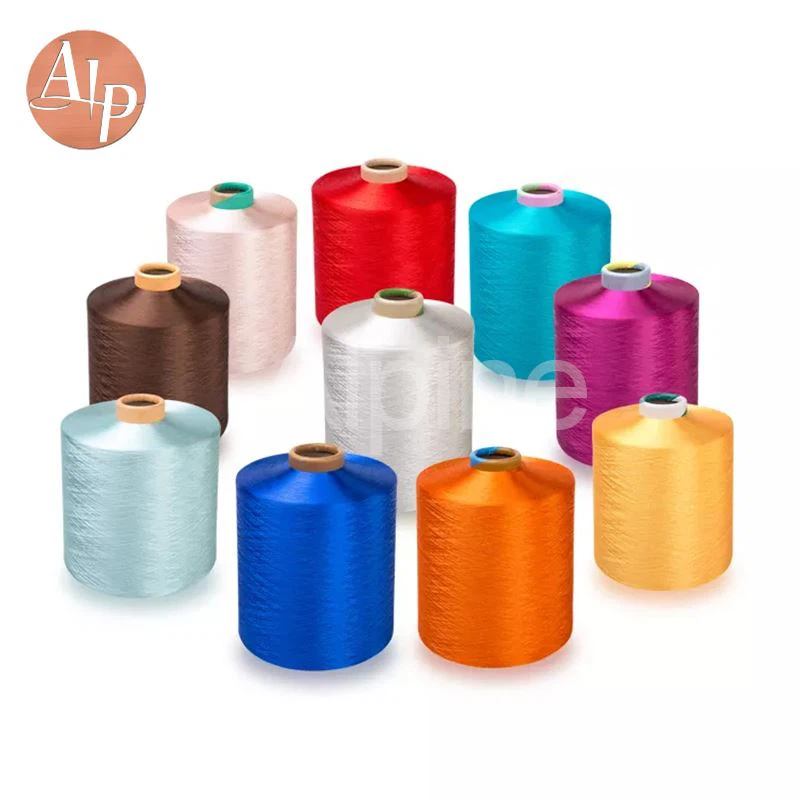
Recycled Polyester Filament Yarn is 100% made from post-consumer PET bottles. This can promote the great work of environment protection. Our sustainable yarn has got the certifications of OEKO-TEX 100, GRS and ISO 9001.
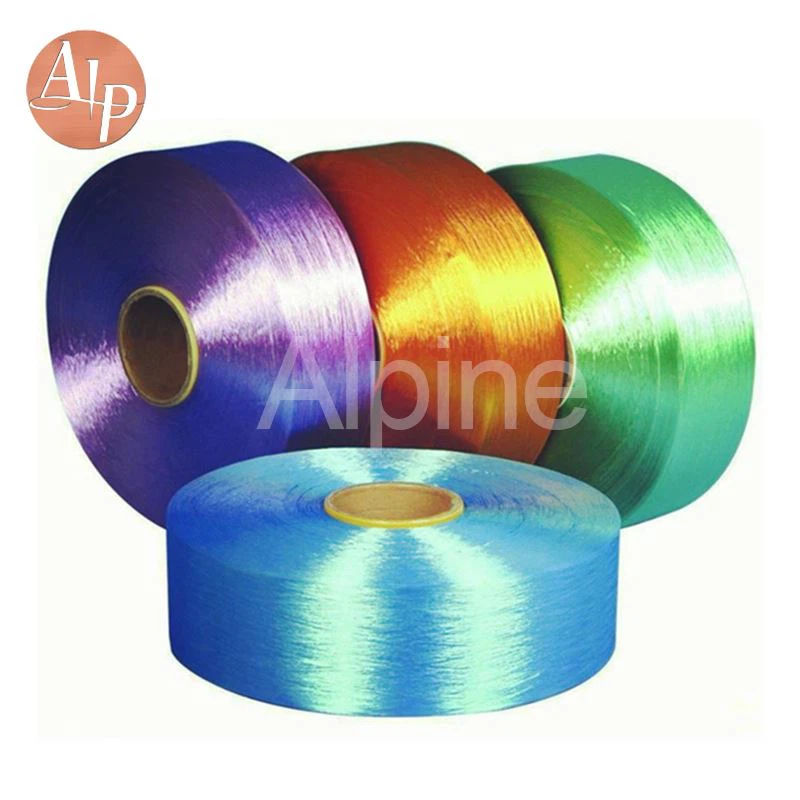
100% Polyester Poy Fdy, Filament Yarn, DDB Or Other Dope Dyed Colors. POY is used for making Polyester Drawn Textured Yarn (DTY). Both have gained the recognition of Oeko Tex Standard 100 (Class I). They are widely used in woven label , overlooking , ribbon, rope, shoelace, elastic tape etc.

We are a professional supplier specialized in producing Polyester Drawn Textured Yarn with more than 15 years' experience. We sell our products to Indonesia, Pakistan, Spain, Belgium, USA, Mexico, Algeria, Turkey, South Africa, Brazil, Uzbekistan etc. Reasonable price, good quality, nice packing, prompt shipment are our advantages and also the necessary conditions to be your stable supplier.

DTY polyester yarn is a type of polyester filament yarn produced by processing POY through a texturing process. It can be used for weaving and knitting of fabrics. We can supply all kinds of DTY polyester yarn, we can customize according to customers' request. We weekly or monthly export to Spain, Mexico, Pakistan, South America, Turkey etc and enjoy a good reputation.

Polyester Draw Textured Yarn is a type of polyester filament yarn produced by processing POY through a texturing process. It can be used for weaving and knitting of fabrics.
Why Choose Us
High quality
We use the most advanced machinery and equipment and the best raw materials for production.
Competitive price
Based on your order quantity, we can offer you a discount. The larger the order quantity, the greater the discount.
Rich experience
We have nearly 20 years of production experience, rich experience and high-quality management to ensure the quality of our products.
After-sale service
We provide comprehensive after-sales service to ensure that customers have a good practice of our products.
Types of White Polyester Thread
Regular polyester yarn
This is the most basic and commonly used polyester yarn. It is smooth, strong, and versatile, suitable for a wide range of applications such as apparel, home textiles, and industrial uses.
Texturized polyester yarn
Texturized polyester yarn is processed to have a textured or crimped appearance. This texture adds bulk, softness, and improved insulating properties to the yarn, making it suitable for applications such as knitwear, blankets, and upholstery.
High tenacity polyester yarn
This type of polyester yarn is engineered to have exceptional strength and resistance to breaking or stretching. It is often used in applications that require high durability and tensile strength, such as ropes, webbing, and industrial fabrics.
Microfiber polyester yarn
Microfiber polyester yarn is made from very fine filaments, typically less than one denier. It is known for its softness, lightweight, and excellent drape. Microfiber polyester yarn is commonly used in apparel, linings, and high-end home textiles.
Flame retardant polyester yarn
Flame retardant polyester yarn is treated with special additives or finishes to make it resistant to ignition and reduce flame spread. It is used in applications where fire safety is a concern, such as protective clothing, curtains, and upholstery for public spaces.
Anti-pilling polyester yarn
This type of polyester yarn is treated or modified to minimize or prevent the formation of pills, which are small balls of fiber that can develop on the surface of fabrics. Anti-pilling polyester yarn is often used in knitwear and other applications where pilling is undesirable.
Recycled polyester yarn
Recycled polyester yarn is produced from post-consumer or post-industrial polyester waste, such as plastic bottles or textile scraps. It offers the same performance as regular polyester yarn while reducing the environmental impact by promoting the reuse of materials.
Uv-resistant polyester yarn
Uv-resistant polyester yarn is treated with additives or finishes that provide protection against harmful ultraviolet (uv) radiation from the sun. It is commonly used in outdoor applications such as awnings, umbrellas, and outdoor furniture fabrics.
Application of White Polyester Thread
Apparel and fashion
White polyester threads are widely used in the apparel and fashion industry due to their strength, durability, and versatility. They are used in garment construction such as stitching seams, hemming, and topstitching. White polyester threads are also used for decorative purposes such as embroidery and embellishment.
Performance and sportswear
In the performance and sportswear industry, white polyester threads are sought after for their moisture wicking properties and durability. They are used in the production of sportswear, athleisure wear, and outdoor gear. The quick-drying nature of white polyester threads makes them ideal for wicking applications.
Home textiles
White polyester threads are commonly used in the production of home textiles, including curtains, upholstery, bedding, and carpets. Their strength and resistance to fading make them suitable for high-traffic areas and sunlight exposure.
Automotive textiles
White polyester threads are widely used in the automotive industry due to their durability and resistance to uv rays and chemicals. They are used in the production of car seats, upholstery, and interiors. White polyester threads ensure the longevity and performance of automotive textiles.
Sewing threads and industrial yarns
White polyester threads are widely used as sewing threads and industrial yarns. Their strength and durability make them suitable for heavy-duty applications, such as the production of bags, shoes and leather goods. White polyester threads are also used in the automotive, aerospace and construction industries for their reliability and performance.
Material of White Polyester Thread
Cotton (co)
100% cotton: The fibers grow around the seeds of the cotton plant. Pure cotton fabrics are soft, breathable, and comfortable.
Cotton blends
Cotton is often blended with other fibers (e.G., polyester) to enhance durability, reduce wrinkles, or add stretch.
Elastane (el)
Often blended with other fibers (e.G., cotton, polyester, viscose) to add stretch and elasticity to fabrics.
Polyester (pl)
Polyester fabrics are known for their durability, wrinkle resistance, and quick-drying properties.
Polyester blends
Blending polyester with other fibers can improve breathability, comfort, and drape.
100% viscose
Viscose (also called rayon), a semi-synthetic fiber, made from natural sources of regenerated cellulose (such as wood), offers a silky and breathable feel.
Viscose blends
Blending viscose with other fibers enhances its properties.
100% wool
Wool fabrics are known for their warmth, breathability, and moisture-wicking properties.
Wool blends
Wool is often blended with other fibers for improved durability and ease of care.
Linen (li)
Linen fabrics are breathable and have a textured, natural appearance.
Linen blends
Blending linen with other fibers can reduce wrinkles and improve drape.
Bamboo (ba)
Fabrics made from bamboo fibers are known for their softness, breathability, and moisture-wicking properties.
Polyester yarn can be manufactured using various methods. One method involves the steps of POY protofilament making, pre-networking, feeding with a first feeding roller, processing with a first deformation heat box, processing with a cooling plate, twisting with a false twister, feeding with a second feeding roller, forming of a middle network, shaping with a second shaping heat box, processing with a shaping overfeeding roller, oiling with an oiling roller, DTY winding shaping, and spinning cake checkout. Another method includes steps such as blowing, carding, drawing, roving, spinning, steaming and shaping, self-falling, and obtaining finished products . Additionally, a production method for polyester cotton yarn involves selecting polyester fiber, cotton fiber strip, silk thread, wood fiber, and modal fiber, and subjecting them to various processes such as opening picking, cotton carding, mixing, roving, and spinning . A manufacturing process for polyester cotton yarn-dyed fabric includes steps such as selecting a polyester cotton blended yarn, performing scouring, blanching, dyeing, soap-boiling, water washing, and drying. Another method for producing polyester yarn includes placing POY and FDY on a winding frame, passing them through draw rollers, compositing them using a godet roller, and drawing the yarn bundle using heated and non-heated rollers.
Best Ways to Store White Polyester Yarn
Storage temperature
Polyester is sensitive to heat, and high temperatures can cause degradation of the polymer structure. Storing polyester yarn in a cool, dry environment (below 25°C) can help extend its shelf life.
Humidity and moisture
Exposure to high humidity or direct contact with moisture can lead to the growth of mold and mildew, which can damage the yarn's quality. Keeping polyester yarn in a low-humidity environment (below 65% relative humidity) is recommended.
Exposure to light
Ultraviolet (UV) light from sunlight or artificial sources can cause discoloration and embrittlement of polyester fibers over time. Storing the yarn in a dark, opaque container or packaging can protect it from light exposure.
Mechanical stress
Excessive tension, compression, or abrasion during storage can lead to physical damage to the yarn, such as fiber breakage or deformation. Proper handling and storage techniques, such as using storage shelves or hanging the yarn, can help minimize mechanical stress.
Contamination
Exposure to chemicals, oils, or other contaminants can also accelerate the degradation of polyester yarn. Maintaining a clean storage environment and avoiding contact with such substances is crucial.
White Polyester Thread production starts with the polymerization of monomers, mainly terephthalic acid and ethylene glycol. This chemical reaction results in long-chain polymers that can be spun into fibers.
Polymerization
The first step is where the raw materials react to form polyester polymer. The molten polyester produced here passes through spinnerets to make fibers.
Spinning
Spinnerets extrude molten polyester, thus creating continuous filaments. This process allows for control over fiber diameter, which typically ranges from 0.5 to 1.5 denier and affects texture and durability.


Drawing
After being extruded, the fibers are cooled and then drawn to align their molecular chains, increasing their strength and flexibility. For instance, this process raises polyester's breaking point to about 3-8 grams per denier.
Crimping
The yarns are crimped to increase bulkiness and texture. This enhances the comfort and look of the fabric after weaving it.
Finishing
At this stage, different finishing techniques, such as dyeing or antistatic treatments, may be applied to yarns to improve their properties so that they can be used in various textiles.
This production process emphasizes several major technical features of White Polyester Thread, such as high tensile strength, moisture management properties, and thermal stability, which prove its versatility across multiple applications in the textile industry.
How to Choose a White Polyester Thread
Consider the end use when choosing the right white polyester thread
When choosing a white polyester thread, the first step is to understand the intended use of the fabric. Each project has unique requirements, and the adventure you choose should align with those needs. For example, if you're making a delicate lace shawl, choose a finer white polyester thread like lace weight or finger weight. These lightweight white polyester threads will produce a delicate, breathable fabric that is perfect for creating intricate lace patterns.
White polyester thread quality: the essentials
The next critical step in choosing the right white polyester thread is to prioritize quality. Quality is the cornerstone of any successful textile project, and it all starts with your choice of white polyester thread. The quality of the white polyester thread determines the appearance, durability, and overall performance of the final fabric.
Get the test report
Another important step in choosing the right white polyester thread is to obtain a test report and sample cone. The test report is available directly from the manufacturer. In addition, requesting a sample white polyester wire cone from the manufacturer gives you the opportunity to evaluate the white polyester thread for yourself. These reports provide valuable information about the physical properties of white polyester wires, including tensile strength, IPI, and more.
Consider the material composition
Material composition is a key factor to consider when looking for a quality white polyester thread. The choice of material affects the properties, properties and suitability of the fabric for a particular purpose. Natural fibers such as cotton, wool, silk and linen have unique properties.
Pay attention to the spinning parameters
Spinning parameters also play a vital role in white polyester thread selection. These parameters provide valuable insights into the properties of white polyester threads, helping you to make fabrics that meet the required specifications. The White Polyester Thread Count (CSP) Count System is an important parameter to consider. CSP represents the length of white polyester thread per unit weight. A higher CSP value indicates a thinner white polyester thread, while a lower value indicates a thicker white polyester thread. Thinner white polyester threads will produce more delicate and lightweight fabrics, while thicker white polyester threads will produce thicker and warmer fabrics.
Balance budget and quality
While quality is still a top priority, there are many white polyester thread manufacturers in India that offer white polyester thread, but not all of them offer top white polyester thread. Therefore, it is very important to ensure the quality of the white polyester thread. It is crucial to consider the cost of white polyester thread as it affects every aspect of the project. The cost of materials can significantly affect your overall budget and affect the quantity and quality of white polyester threads.
Seasonal Uses of White Polyester Thread
Summer garments and accessories
White polyester thread is perfect for creating lightweight garments and accessories during the summer. Its ability to wick moisture away from the body makes it ideal for warm weather wear. For example, you can use white polyester thread to knit or crochet breathable tank tops, airy shawls, or stylish sun hats. These items are not only fashionable but also practical for staying cool in the heat.
During summer, lightweight white polyester thread can be used to craft beach cover-ups, poolside bags, and even outdoor seat cushions. The versatility of this material allows crafters to create a wide range of items that are both functional and visually appealing.
Winter blankets and sweaters
When temperatures drop, bulky white polyester thread becomes an excellent choice for making warm winter blankets and cozy sweaters. Its insulating properties help trap heat within the fibers, providing comfort during chilly days and nights. Crafters can use this type of yarn to produce chunky knit throws or cable-knit cardigans that offer both style and warmth.
For instance, you can make soft blankets with thick white polyester thread in various colors to match your home decor while keeping yourself snug on cold evenings.
Year-round crafting needs
The versatility of white polyester thread makes it suitable for year-round crafting needs. Whether it's a delicate lace shawl for spring or a plush scarf for autumn, this material offers endless possibilities throughout the seasons.
Crafters have the flexibility to experiment with different patterns using white polyester thread while creating versatile pieces like market tote bags or decorative home accents such as throw pillows.
Company Introduction
Hangzhou Qiandao Lake Alpine Foreign Trade Ltd was established in. It is a leading supplier of yarn and fabric more than 10 years. It mainly engaged in producing virgin and recycled POY, DTY, ACY, FDY, Embroidery thread.

Our Certificate


FAQ
Hot Tags: white polyester thread, China white polyester thread manufacturers, suppliers, factory, polyester thread for scarves, polyester thread for lingerie wearers clothes, polyester thread for face mask threads, durable polyester thread, polyester thread for kitchen towels, polyester thread for cleaning cloths


