


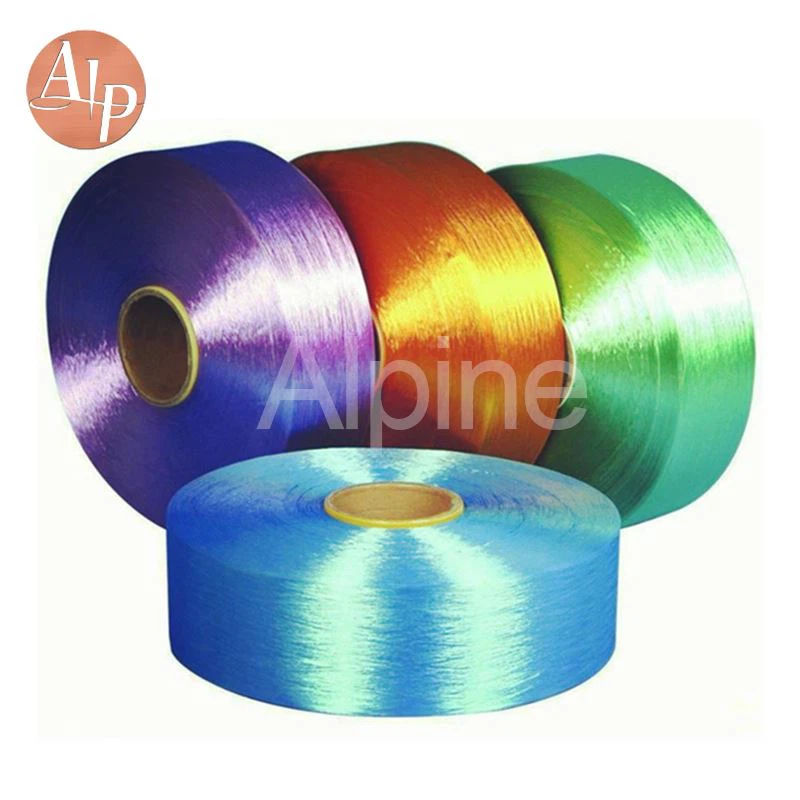
What Is Polyester Fabric Yarn?
Polyester is a synthetic material belonging to the class of polymers. This material mainly contains Polyethylene Terephthalate (PET) and is produced using PTA and MEG, which are spun directly. PFY are both monofilaments and multifilaments. Single polyester filaments are grouped together and then twisted or air-tangled to make them functional. A monofilament yarn is a single polyester fibre without any twists. Polyester yarns have a broad commercial usage that typically includes embroidery, knitting, weaving, sewing and more to produce consumer goods such as bed sheets, bedspreads, curtains, draperies, wall coverings, pillowcases and other home furnishings. The global textile industry reaps the benefits of polyester yarns, which can be seen in t-shirts, blouses, lingeries and so on.
Advantages of Polyester Fabric Yarn
It is stronger than natural fibers
Polyester yarn is derived from xylene, a hydrocarbon produced during the cracking of crude oil. Xylene is then mixed with nitric acid to produce PTA. PTA is then mixed with ethylene glycol in a reaction chamber to produce polyester. This process produces long molecules that are further stretched and spun into polyester threads.
This molecular stretching and alignment process gives polyester fabric threads their elasticity and strength. As a result, polyester does not lose its shape over time, whereas cotton threads are not as strong. Also, since it is synthetic, it is also more resistant to mildew, abrasion, and sun damage. This is why polyester is a top choice for producing fabrics that are resistant to wear and tear.
It is stretchy and flexible
Ever wondered why sportswear is made of polyester? That's because polyester is stretchy and flexible. The long polymer molecules make it easy to stretch, and it returns to its original shape after being stretched. This makes it ideal for fabrics that require a lot of movement, whether they are stretchy or flexible.
It dries quickly
Another reason why polyester is often chosen for sportswear is that it dries quickly, unlike cotton. Cotton tends to absorb moisture (sweat) easily, and the sweat doesn't evaporate quickly. Polyester, on the other hand, is somewhat water-resistant, so it doesn't absorb moisture; instead, it pulls it away from the skin, allowing it to evaporate quickly. On a 100% polyester blend, water beads up on the surface instead of being soaked through.
It's versatile
There are few other materials in the world as versatile as polyester thread. Polyester is used not only to produce fabrics, but also water bottles, power belts, ropes, tire cords, boat sails, and even floppy disks. This makes polyester thread a perfect choice for a wide variety of applications. For example, polyester yarn is used in car tires, sportswear, wire insulation, boat sails, and much more.
It's affordable
Finally, it's affordable. Compared to cotton thread, polyester yarn can be mass-produced at an affordable cost. That's why it's become the top choice for many companies that want to produce low-cost fabrics and provide their customers with an easily accessible product. In fact, even producing multi-colored polyester thread isn't as expensive as one might think!

Full drawn yarn produced from the melting and extrusion of the polyester chips,at higher spinning speed coupled with intermediate drawing integrated in the process itself. Articles from 30D to 500D.

Polyester Filament Yarn use polyester chips as raw material. Various specifications, mainly from 50D to 900D. Thousands of colors for your choice.

Soft Polyester Yarn, made from polyester chips, spin with master batch, Covering denier 50D to 450D. Anti-Bacteria, Sustainable, High-Tenacity, Moisture-Absorbent..

White Polyester Yarn have 75D, 100D, 150D, 300D. Bleach white (optical white). Evenness, High-color fastness, High-elastic. OEKO-TEX Class I.

Polyester Fabric Yarn Merits
High quality
Environment protected
Excellent strength
Over 400 colors in stocks.

100% Polyester Poy Fdy, Filament Yarn, DDB Or Other Dope Dyed Colors. POY is used for making Polyester Drawn Textured Yarn (DTY). Both have gained the recognition of Oeko Tex Standard 100 (Class I). They are widely used in woven label , overlooking , ribbon, rope, shoelace, elastic tape etc.

We are a professional supplier specialized in producing Polyester Drawn Textured Yarn with more than 15 years' experience. We sell our products to Indonesia, Pakistan, Spain, Belgium, USA, Mexico, Algeria, Turkey, South Africa, Brazil, Uzbekistan etc. Reasonable price, good quality, nice packing, prompt shipment are our advantages and also the necessary conditions to be your stable supplier.

DTY polyester yarn is a type of polyester filament yarn produced by processing POY through a texturing process. It can be used for weaving and knitting of fabrics. We can supply all kinds of DTY polyester yarn, we can customize according to customers' request. We weekly or monthly export to Spain, Mexico, Pakistan, South America, Turkey etc and enjoy a good reputation.

Polyester Draw Textured Yarn is a type of polyester filament yarn produced by processing POY through a texturing process. It can be used for weaving and knitting of fabrics.
Why Choose Us
High quality
We use the most advanced machinery and equipment and the best raw materials for production.
Competitive price
Based on your order quantity, we can offer you a discount. The larger the order quantity, the greater the discount.
Rich experience
We have nearly 20 years of production experience, rich experience and high-quality management to ensure the quality of our products.
After-sale service
We provide comprehensive after-sales service to ensure that customers have a good practice of our products.
Types of Polyester Fabric Yarn
Polyester filament yarns
PET is used to manufacture Polyester Filament Yarns. It is globally used in the modern fibre manufacturing industries. These are strong fibres used in both the multifilament and monofilament forms. It has High tenacity.PFY are used for making lightweight fabrics such as organdie and voile while the regular tenacity PFY is used to make undergarments while the low tenacity or lower version of PFY are used to make tunics and shirts.
Spun yarns
Spun yarns are the most popularly used yarns. This is created by the spinning process of PCDT or cut PET. The spun yarn has a bulky and crimped look but under tension, it looks smooth and lean. These yarns are spun in a course higher than the 16 tex count range. It is used for knitting and weaving purposes.
Textured yarns
PET multifilaments are used to create Textured yarn. It is created by twisting and drawing polyester POY. That is how yarns develop stretch and bulk by processing. The textured yarns have a sheen and smooth texture.
Application of Polyester Fabric Yarn
Fashion and footwear
Polyester yarn is utilized in the fashion industry for a long time. Its wrinkle-resistant property makes it is highly preferred by the designers for special appearances, as it will make their outfit look classy and elegant.
Polyester is also used for footwear. Mostly for the purpose of winter footwear, as it absorbs more heat, hence providing you with comfort. While for the summer season, polyesters footwear is generally mixed along with other fabrics. Mostly polyester made shoes are preferred because of the durability of the fiber.
Sheets, duvet covers and sleeping bags
Polyester is helpful in the manufacturing of a number of sleeping bags. People highly use these bags use when they go on high altitudes for camping as it absorbs the heat and keeps them warm in cold regions.
As discussed earlier, polyester yarn uses static energy and becomes clingy. Therefore, it is used to make sheets and duvet covers, which remain fixed at their place for a long time. Moreover, its color does not fade away quickly.
Soft furnishings
A polyester yarn can be compressed to make soft furnishings. Some ultra-thin fibers are used by manufacturers, which give a smooth and soft surface to the polyester for an extended period.
The furniture made does not get affected in case of accidental spills. This is because the polyester yarn is mixed with other fabric in order to provide smooth finishing protection to the furniture.
Luggage and other kinds of bags
The polyester yarn has the 'no water absorb' property, thereby it's an excellent material for making bags, especially which carry a hefty load. The bags will not absorb water, especially if you are going to places which are near the sea or the ocean.
However, there is one condition to be applied. That is, it should not be mixed with wool for crease resistance. Also, the no wrinkling property makes polyester yarn an excellent fit for luggage, as it remains intact for years.
Making of duvets
The polyester yarn duvet will always keep you warm during the winter season. The yarn works as an insulator and does not allow the heat trapped around your body to leave the duet.
Thereby, the cold environment does not affect your body. Although, if you are using a polyester duvet along with a room heater, then it might make you feel uncomfortable after some time.
Sewing threads and textiles
Polyester yarn uses the 'fast dry' technique, which refers to the policy of natural drying as compared to the other fabrics. Therefore, it is a good material to make sewing threads and various other textiles. Generally, it is mingled along with other fabrics to retain its properties.
Polyester is also capable of utilizing the features of different fabrics as well. With the innovation in technology and other factors, polyester is at times, combined with a plethora of fabrics. However, you can identify it reading the tags attached.
5 Quick Tips To Preserve Polyester Fabric Yarn
Avoid high heat
Polyester yarns are easy to dry and wash, but they are sensitive to heat. If you expose polyester yarns directly to high temperatures, then your garments can be damaged. Never expose garments to constant high temperatures while using a heated dryer or a hot iron to smooth out wrinkles. You should use medium to low temperatures in your washing machine before washing your garments. Moreover, there is no need to iron polyester clothes, just press them gently with your hands and hang them up immediately after washing before wearing them.
Avoid sun exposure
Apart from protecting your polyester yarns from artificial heat sources, you should also protect them from direct sunlight. If polyester clothes are exposed to direct sunlight for a long time, then the bright colors of synthetic fibers will eventually start to fade. So, to dry your clothes, just place them in partial sunlight for a few minutes. If the sunlight in your area is too harsh, then you should cover your clothes with a cotton cloth so that they can dry easily.
Remove stains quickly
Well, if you sweat a lot or wear polyester clothes while exercising, then you should not let the sweat stains sit for too long. If the sweat stains are not cleaned in time, then the sweat will cause the fabric to change color due to sweating. So whenever your clothes get sweaty, wash them immediately with clean water.
Oily stains
Synthetic fibers pick up oily stains, and we all know that oil and water don't mix. So if your polyester shirt gets an oily stain, it can't be removed with regular washing. That's why to remove stubborn oil stains from your favorite polyester t-shirt, you need to use some professional detergents that remove oil stains from polyester yarns. Also, the oil stain should be removed immediately because once the stain gets old, it won't disappear without a trace.
Wash in cold water
Polyester is known as the wonder fabric of the modern world because it is a dryable, durable, and easy-care fabric. Polyester yarn can be easily washed in a washing machine with warm water, but you should check the label on the fabric before washing. You should tumble dry polyester yarn on a low speed and high heat. It's best to remove the polyester yarn from the dryer when it's still a little damp to avoid wrinkles from forming. This way, you don't need to iron the clothes.
What Processes Are Polyester Fabric Yarn for?
Spinning and fiber production
Polyester fabric yarn is extensively used in the production of synthetic fibers. It can be spun into yarns and filaments, which are then used to create a wide range of textiles and fabrics.
Weaving and knitting
Polyester fabric yarn fibers can be woven or knitted into fabrics of different textures, weights, and patterns. These fabrics find applications in clothing, upholstery, bedding, curtains, and other home furnishings.
Dyeing and printing
Polyester fabric yarn has excellent dye affinity, allowing for vibrant and long-lasting colors. It can be dyed using various dyeing techniques, including dispersed dyes that are specifically designed for polyester fabric yarn. Polyester fabric yarn fabrics can also be printed with different patterns and designs using techniques like screen printing or sublimation printing.
Laminating and coating
Polyester fabric yarn can be laminated or coated to enhance its properties or add specific functionalities. For example, polyester fabric yarn films can be laminated with adhesives to create protective layers or used as a substrate for pressure-sensitive tapes. Polyester fabric yarn fabrics can be coated with water-resistant or flame-retardant finishes for specialized applications.
Molding and extrusion
Polyester fabric yarn can be processed through molding and extrusion techniques to create various products. For instance, it can be molded into intricate shapes to manufacture automotive parts, electrical components, and consumer goods. Polyester fabric yarn resins can also be extruded to produce films, sheets, and filaments for packaging, insulation, and 3d printing applications.
Nonwoven production
Polyester fabric yarn fibers can be processed into nonwoven fabrics using techniques like needle punching, thermal bonding, or spun bonding. Nonwoven polyester fabric yarn fabrics find applications in filtration, geotextiles, medical products, and disposable goods.
Composite manufacturing
Polyester fabric yarn can be combined with other materials to form composite structures. For example, fiberglass-reinforced polyester fabric yarn composites are widely used in the construction industry for applications such as roofing panels, pipes, and tanks. Polyester fabric yarn-based composites are also utilized in aerospace, automotive, and marine industries.
Thermal and chemical resistance treatments
Polyester fabric yarn can be treated with coatings or finishes to enhance its resistance to heat, chemicals, uv radiation, or other environmental factors. These treatments expand the range of applications for polyester fabric yarn in industries such as outdoor textiles, protective clothing, and industrial applications.
How to Choose a Polyester Fabric Yarn
Strength requirements
Polyester industrial yarns are available in various strength and durability levels. Therefore, before choosing the right yarn, one must determine the strength requirements of the application. High-tenacity or twisted polyester yarns are ideal for applications that require high strength and durability. These yarns are highly resistant to abrasion and are suitable for sewing threads, safety belts, and ropes. On the other hand, if the application requires a soft and comfortable feel, then textured polyester yarns will be applicable. These yarns are best suited for making apparel, bedding, and upholstery.
Environmental conditions
Environmental conditions play a major role in determining the performance of polyester industrial yarns. If the application needs to withstand extreme temperatures, humidity, or abrasion, then highly oriented yarns must be considered. Highly oriented yarns are created by stretching the polyester fibers to orient them in the same direction, giving them greater strength and durability. If there is continuous exposure to hazardous chemicals, then high tenacity yarns must be selected. If the application involves making fabrics for the summer season, then air textured yarns can be selected.
Color requirements
Polyester industrial yarns are available in a variety of colors, so you can easily choose the right color for your product. When choosing polyester industrial yarns, one must consider the color requirements of the product. You can choose from a range of vibrant and muted shades or select specific colors to suit your application requirements.
Application type
When choosing the right polyester industrial yarn, it is crucial to consider the type of application. For example, if the application is sewing thread, you must choose twisted polyester yarn or high tenacity polyester industrial thread because of their high strength and durability. If the application is interior decoration, you should choose air textured polyester yarn. These yarns have a unique structure that creates a soft and comfortable feel.
Company Introduction
Hangzhou Qiandao Lake Alpine Foreign Trade Ltd was established in. It is a leading supplier of yarn and fabric more than 10 years. It mainly engaged in producing virgin and recycled POY, DTY, ACY, FDY, Embroidery thread.

Our Certificate


FAQ
Hot Tags: polyester fabric yarn, China polyester fabric yarn manufacturers, suppliers, factory, polyester yarn design, polyester yarn allure, fine polyester yarn, fdy low shrinkage fiber, fdy moisture wicking filament, polyester yarn thought


