


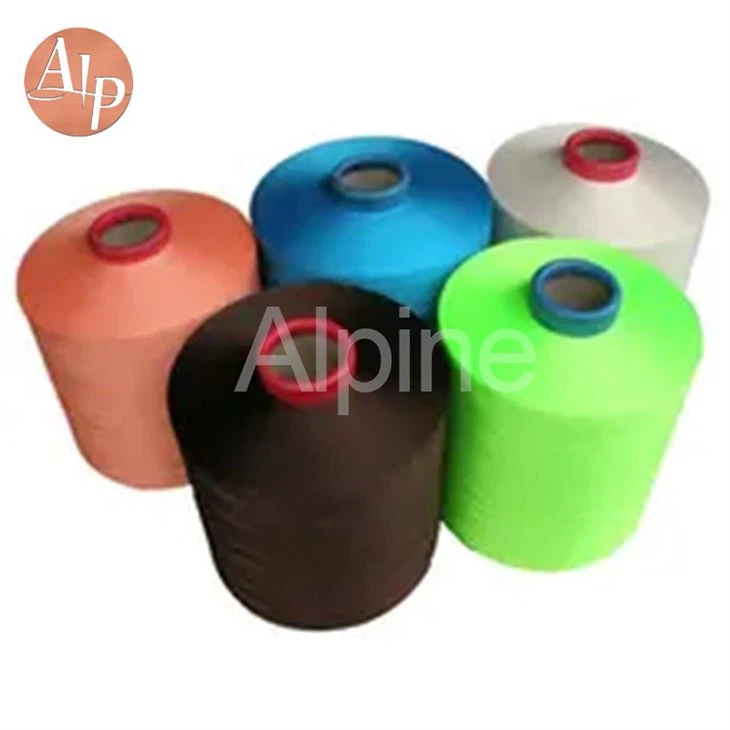
Hey there! I'm a supplier of Dty (Draw Textured Yarn), and today I'm super excited to chat with you about the various applications of Dty in engineering. Dty is an amazing material that has found its way into numerous engineering fields, offering a wide range of benefits. Let's dive right in!
Textile Engineering
One of the most common applications of Dty is in textile engineering. Dty is used to create all sorts of fabrics, from clothing to home textiles. In the fashion industry, Polyester Draw Textured Yarn is a popular choice for making garments. It has excellent stretch and recovery properties, which means clothes made from Dty can fit well and retain their shape over time.
For example, sportswear often uses Dty because it allows for a full range of motion. Whether you're running, jumping, or doing yoga, the fabric won't restrict your movement. Also, Dty is relatively easy to care for. It doesn't wrinkle easily and can withstand multiple washes without losing its quality.
In home textiles, Dty is used in making curtains, bedsheets, and upholstery. The yarn can be dyed in a variety of colors, so you can get the exact look you want for your home. It's also durable, which is great for items that are used frequently. 100% Polyester Yarn is especially popular in this area because it's resistant to stains and fading, making it a practical choice for everyday use.

Automotive Engineering
Dty also plays an important role in automotive engineering. Inside the car, Dty is used for seat covers and carpets. Seat covers made from Dty are not only comfortable but also resistant to wear and tear. The constant friction from people getting in and out of the car won't damage the fabric easily.
Moreover, Dty can be engineered to have flame - retardant properties. This is a crucial safety feature in cars, as it can help prevent the spread of fire in case of an accident. For carpets, Dty provides good insulation and sound absorption. It can reduce the noise from the road, making your driving experience more peaceful.
Geotextile Engineering
In geotextile engineering, Dty is used to make geotextiles, which are materials used in civil engineering projects. Geotextiles made from Dty can be used for soil stabilization. They are placed between different layers of soil to prevent soil erosion and improve the stability of the ground.
For example, in road construction, Dty - based geotextiles can be used under the asphalt layer. They distribute the load evenly, reducing the stress on the road surface and preventing cracks from forming. In addition, Dty geotextiles are permeable, which means they allow water to pass through. This is important for drainage in construction projects, as it helps prevent waterlogging and damage to the structure.
Filtration Engineering
Filtration is another area where Dty shines. Dty can be used to make filter media for various applications. In air filtration, Dty - based filters can capture dust, pollen, and other particles. They are often used in HVAC systems in buildings to improve indoor air quality.
In water filtration, Dty filters can remove impurities and contaminants from water. They are used in water treatment plants, as well as in household water filters. The fine fibers of Dty can trap small particles effectively, ensuring that the water is clean and safe to use.
Composite Materials Engineering
Dty is also used in the production of composite materials. Composite materials are made by combining two or more different materials to get enhanced properties. When Dty is combined with other materials like resins, it can create strong and lightweight composites.
These composites are used in aerospace, marine, and other high - performance industries. In aerospace, Dty - based composites can be used to make parts of an aircraft, such as wings and fuselage components. The lightweight nature of Dty helps reduce the overall weight of the aircraft, which in turn improves fuel efficiency.
In the marine industry, Dty composites are used for making boat hulls. They are resistant to water and corrosion, which is essential for long - term use in a marine environment.
Medical Engineering
In medical engineering, Dty has some interesting applications too. It can be used to make medical textiles, such as surgical gowns and bandages. Surgical gowns made from Dty are lightweight and breathable, which is important for the comfort of the medical staff during long surgeries.
They also provide a barrier against bacteria and other contaminants, helping to prevent infections. Bandages made from Dty can conform to the body shape easily and provide gentle compression. They are also hypoallergenic, which is crucial for patients with sensitive skin.
Electrical Engineering
Although not as well - known as in other fields, Dty has applications in electrical engineering. Dty can be used as insulation for electrical wires. The yarn provides good electrical insulation properties, protecting the wires from short - circuits and other electrical problems.
It's also flexible, which makes it easy to wrap around wires of different shapes and sizes. In addition, Dty is resistant to heat and chemicals, which are important factors in electrical applications where the wires may be exposed to harsh environments.
As you can see, Dty has a wide range of applications in engineering. Whether it's in textiles, automotive, geotextiles, filtration, composites, medical, or electrical engineering, Dty offers unique properties that make it a valuable material.
If you're in the market for high - quality Dty for your engineering projects, I'd love to have a chat with you. We can discuss your specific needs and see how our Dty products can meet them. Whether you need a small quantity for a prototype or a large - scale supply for a big project, we've got you covered. So, don't hesitate to reach out and start a conversation about your Dty procurement.
References
- "Textile Engineering Handbook", John Wiley & Sons
- "Automotive Materials and Their Applications", CRC Press
- "Geotextiles in Civil Engineering", Elsevier
- "Filtration Technology: Principles and Practices", McGraw - Hill
- "Composite Materials: Design and Applications", Springer
- "Medical Textiles: Design, Development and Applications", Woodhead Publishing
- "Electrical Insulation Engineering", Pearson Education