


As a supplier of Fdy Yarn, I've always been fascinated by the cultural and historical backgrounds that surround this remarkable product. Fdy Yarn, or Full Drawn Yarn, has a rich tapestry of stories and influences that have shaped its journey through time and across cultures. In this blog post, I'll delve into the cultural and historical aspects of Fdy Yarn, exploring its origins, development, and significance in various societies.
Origins and Early Development
The story of Fdy Yarn begins with the broader history of synthetic fibers. The development of synthetic fibers was a significant milestone in the textile industry, driven by the need for materials that were more durable, versatile, and cost - effective than natural fibers. In the mid - 20th century, polyester emerged as one of the most important synthetic fibers.
Polyester was first developed in the 1940s in the United Kingdom and the United States. The process of creating polyester fibers involves the polymerization of ethylene glycol and terephthalic acid, which results in a long - chain polymer. This polymer can then be spun into fibers, including Fdy Yarn.
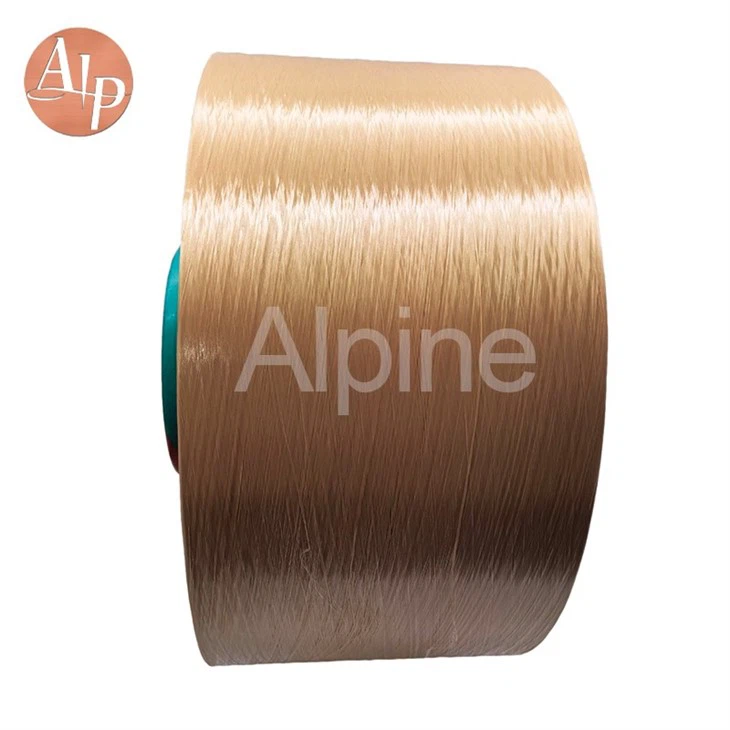

Fdy Yarn, specifically, is produced through a process called full drawing. In this process, the polyester filaments are drawn to their maximum potential length and orientation, resulting in a yarn that is strong, smooth, and has a high degree of uniformity. This production method was a significant advancement in the polyester fiber industry, as it allowed for the creation of a yarn with superior properties compared to other polyester yarns.
Cultural Significance in Different Regions
Asia
In Asia, particularly in countries like China, India, and South Korea, the textile industry has a long and storied history. With the rise of synthetic fibers, Fdy Yarn quickly became an important part of the textile landscape.
In China, the world's largest textile producer, Fdy Yarn is widely used in the production of clothing, home textiles, and industrial fabrics. The affordability and durability of Fdy Yarn have made it a popular choice for mass - produced clothing items. It has also played a role in the growth of the fast - fashion industry, as it allows for quick and cost - effective production of trendy garments.
In India, textiles are deeply ingrained in the culture. Traditional Indian clothing, such as sarees and salwar kameez, are now being produced with a blend of natural and synthetic fibers, including Fdy Yarn. The addition of Fdy Yarn provides these traditional garments with increased strength and colorfastness, while still maintaining a certain level of drape and comfort.
South Korea, known for its innovative fashion industry, has also embraced Fdy Yarn. Korean designers are using Fdy Yarn in the creation of modern and stylish clothing, often combining it with other high - tech materials to create unique textures and effects.
Europe
In Europe, the textile industry has a long history of craftsmanship and quality. Fdy Yarn has found its place in both high - end fashion and industrial applications.
In Italy, famous for its luxury fashion brands, Fdy Yarn is used in the production of high - quality fabrics. Designers appreciate its ability to hold color well and its smooth finish, which gives garments a polished look. At the same time, in industrial applications, Fdy Yarn is used in the production of automotive interiors, technical textiles, and geotextiles.
In the United Kingdom, the textile industry has a rich heritage, and Fdy Yarn has been incorporated into various sectors. It is used in the production of workwear, where its durability is highly valued. Additionally, it is also used in the production of home furnishings, such as curtains and upholstery.
Americas
In the Americas, Fdy Yarn has a diverse range of applications. In the United States, it is widely used in the production of sportswear and activewear. The moisture - wicking properties of Fdy Yarn make it an ideal choice for these types of garments, as it helps keep the wearer dry and comfortable during physical activities.
In Latin American countries, Fdy Yarn is used in the production of traditional and contemporary clothing. It has also contributed to the growth of the local textile industries, providing employment opportunities and economic development.
Technological Advancements and Their Impact
Over the years, technological advancements have continued to shape the production and use of Fdy Yarn. New spinning techniques have been developed to improve the quality and performance of Fdy Yarn. For example, the use of advanced extrusion technology has allowed for the production of finer and more uniform filaments, resulting in a softer and more luxurious feel.
In addition, research and development efforts have focused on enhancing the functional properties of Fdy Yarn. Some Fdy Yarns are now treated with special finishes to make them flame - retardant, anti - static, or resistant to UV rays. These functional enhancements have expanded the range of applications for Fdy Yarn, from outdoor clothing to industrial safety gear.
Market Trends and the Future of Fdy Yarn
The market for Fdy Yarn is constantly evolving. With the increasing demand for sustainable and eco - friendly products, there is a growing trend towards the development of recycled Fdy Yarn. Manufacturers are using recycled polyester materials to produce Fdy Yarn, which helps reduce the environmental impact of the textile industry.
Another trend is the customization of Fdy Yarn. Customers are increasingly looking for yarns with specific properties, such as different colors, textures, and functional features. This has led to the development of more flexible production processes that can meet these customized requirements.
As a supplier of Fdy Yarn, I'm excited to be part of this dynamic industry. We offer a wide range of Fdy Yarn products, including Poy Fdy, Soft Polyester Yarn, and Full Drawn Yarn. Our products are known for their high quality, consistency, and performance.
If you're interested in learning more about our Fdy Yarn products or have any specific requirements, I encourage you to reach out to us for a procurement discussion. We're committed to providing the best solutions for your textile needs and look forward to collaborating with you.
References
- Textile History: A Global Survey, by Virginia B. Garner
- The Handbook of Fiber Science and Technology, Volume 3: High - Technology Fibers, by Mark Lewin and Peter E. Cragg
- Polyester Fibers: Science and Technology, by S. Fakirov