


Polyester yarn has become an indispensable material in various industries due to its versatility, durability, and cost - effectiveness. Among the different types of polyester yarns, thick polyester yarn holds a unique position. As a supplier of thick polyester yarn, I am well - versed in its definition, characteristics, and applications. In this blog, I will delve into the details of what thick polyester yarn is and why it is a popular choice in many sectors.
Defining Thick Polyester Yarn
Thick polyester yarn can be defined as a type of yarn made from polyester fibers with a relatively large diameter compared to standard or fine polyester yarns. Polyester itself is a synthetic polymer, typically polyethylene terephthalate (PET), which is known for its strength, resistance to shrinking and stretching, and quick - drying properties. When we talk about thick polyester yarn, we are referring to yarns that have a higher linear density, often measured in denier or tex.
Denier is a unit of measurement that indicates the weight in grams of 9,000 meters of yarn. A higher denier value means a thicker yarn. For example, a 1000 - denier polyester yarn is thicker than a 200 - denier one. Tex, on the other hand, is the weight in grams of 1,000 meters of yarn. Thick polyester yarns usually have a denier value of 500 or above or a relatively high tex value, depending on the specific application requirements.
Characteristics of Thick Polyester Yarn
Strength and Durability
One of the most prominent characteristics of thick polyester yarn is its high strength. The large - diameter fibers in the yarn are able to withstand significant stress and strain without breaking. This makes it ideal for applications where durability is crucial, such as in the manufacturing of industrial ropes, nets, and heavy - duty fabrics. For instance, fishing nets made from thick polyester yarn can endure the harsh marine environment and the weight of large catches.
Resistance to Environmental Factors
Thick polyester yarn is highly resistant to various environmental factors. It is resistant to moisture, mildew, and rot, which means it can be used in outdoor applications without significant degradation. Additionally, it has good resistance to sunlight, making it suitable for products like outdoor awnings and tents. Polyester fibers also do not absorb water easily, so they dry quickly, reducing the risk of mold growth.
Chemical Resistance
Polyester is resistant to many chemicals, including acids and alkalis. Thick polyester yarn can therefore be used in industrial settings where exposure to chemicals is possible. For example, it can be used in the production of chemical - resistant gloves and aprons.
Elasticity and Resilience
Although polyester is not as elastic as some natural fibers like rubber, thick polyester yarn still has a certain degree of elasticity and resilience. It can stretch under tension and then return to its original shape, which is useful in applications such as elastic bands and some types of fabric that require a bit of stretch.
Production of Thick Polyester Yarn
The production of thick polyester yarn involves several steps. First, the raw material, polyester chips, are melted at a high temperature. Then, the molten polyester is extruded through spinnerets, which are small holes that determine the shape and size of the individual polyester fibers. After extrusion, the fibers are cooled and solidified.
To produce thick yarn, multiple fibers are usually combined or spun together. This can be done through various spinning methods, such as ring spinning, open - end spinning, or air - jet spinning. Ring spinning is a traditional method that produces high - quality, strong yarns, while open - end spinning is a faster and more cost - effective method. Air - jet spinning is known for its ability to produce yarns with unique characteristics, such as a soft feel.
Applications of Thick Polyester Yarn
Textile Industry
In the textile industry, thick polyester yarn is used to make a wide range of products. It can be woven or knitted into heavy - duty fabrics for upholstery, curtains, and outdoor clothing. For example, thick polyester fabric is often used in the production of motorcycle jackets because of its abrasion resistance and durability. It can also be used to create decorative elements in textiles, such as thick cords and tassels.
Industrial Applications
As mentioned earlier, thick polyester yarn is widely used in industrial applications. It is a key material in the production of ropes, cables, and nets. These products are used in construction, shipping, and fishing industries. In the construction industry, thick polyester ropes are used for lifting heavy objects and securing scaffolding. In the shipping industry, they are used for mooring ships. Fishing nets made from thick polyester yarn are strong enough to hold large fish and withstand the forces exerted by the water.
Automotive Industry
Thick polyester yarn is also used in the automotive industry. It can be used to make seat covers, floor mats, and headliners. The durability and resistance to wear and tear of thick polyester yarn make it suitable for the high - traffic areas inside a vehicle. Additionally, its resistance to chemicals and moisture is beneficial in an automotive environment where spills and exposure to various substances are common.
Comparison with Other Yarns
When compared with other types of yarns, thick polyester yarn has several advantages. For example, compared to natural fibers like cotton or wool, thick polyester yarn is more durable, resistant to moisture, and easier to maintain. Cotton yarn, while soft and breathable, is prone to shrinking and wrinkling, and it can be damaged by moisture and mildew. Wool yarn, on the other hand, is more expensive and requires special care, such as dry - cleaning.

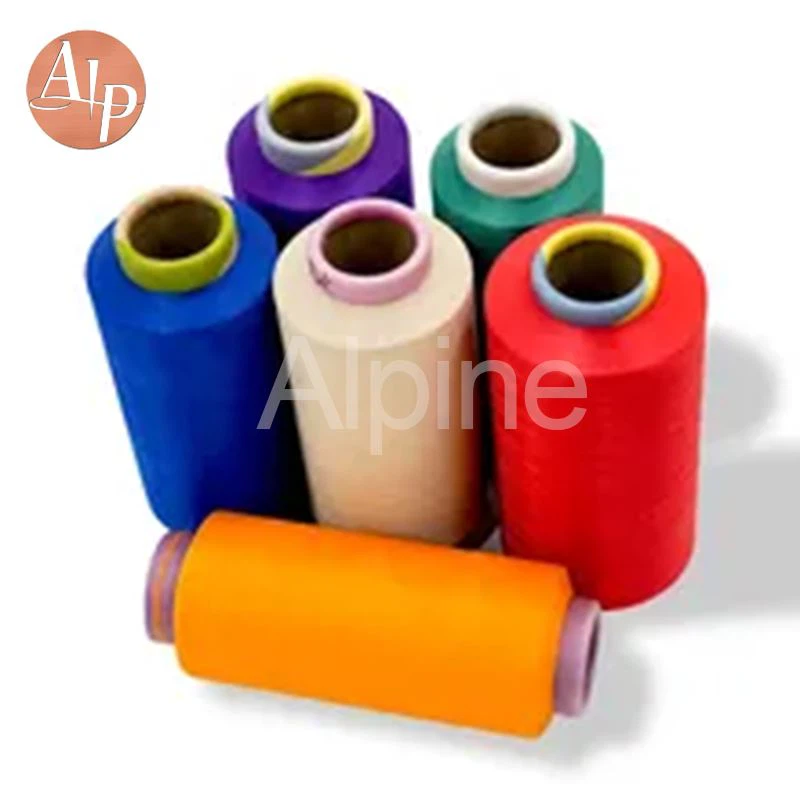
Compared to other synthetic yarns, thick polyester yarn still stands out. For instance, Polyester Covered Spandex Yarn is mainly known for its elasticity, while thick polyester yarn is more focused on strength and durability. Polyester Draw Textured Yarn is often used for its aesthetic properties, such as a soft and bulky appearance, but thick polyester yarn is better suited for heavy - duty applications. And 100 Micro Polyester Yarn is fine and used for making lightweight and breathable fabrics, while thick polyester yarn is for more robust products.
Our Offer as a Thick Polyester Yarn Supplier
As a supplier of thick polyester yarn, we offer a wide range of products to meet different customer needs. Our thick polyester yarns come in various denier values, colors, and finishes. We ensure that our products are of the highest quality, meeting international standards for strength, durability, and environmental resistance.
We have a state - of - the - art production facility that allows us to produce thick polyester yarn efficiently and cost - effectively. Our team of experts is dedicated to providing excellent customer service, from product selection to after - sales support. Whether you are a small - scale manufacturer or a large - scale industrial enterprise, we can provide you with the right thick polyester yarn for your specific application.
If you are in the market for thick polyester yarn, we invite you to contact us for more information. We are ready to discuss your requirements and provide you with a competitive quote. Our goal is to establish long - term partnerships with our customers based on trust, quality, and mutual benefit.
Conclusion
In conclusion, thick polyester yarn is a versatile and valuable material with a wide range of applications. Its unique combination of strength, durability, and resistance to environmental factors makes it a popular choice in many industries. As a supplier, we are committed to providing high - quality thick polyester yarn to meet the diverse needs of our customers. If you have any questions or are interested in purchasing thick polyester yarn, please do not hesitate to get in touch with us. We look forward to serving you and helping you find the perfect solution for your business.
References
- Morton, W. E., & Hearle, J. W. S. (1993). Physical Properties of Textile Fibres. Woodhead Publishing.
- Lewin, M., & Pearce, E. M. (Eds.). (1998). Handbook of Fiber Chemistry. Marcel Dekker.