


Hey there! As a Polyester Fdy supplier, I often get asked about the melting point of Polyester Fdy. So, I thought I'd take some time to break it down for you in this blog post.
First off, let's talk a bit about what Polyester Fdy is. Polyester Fdy, or Fully Drawn Yarn, is a type of synthetic fiber. It's widely used in the textile industry because of its excellent properties like high strength, good elasticity, and resistance to wrinkles. You can find it in all sorts of products, from clothing to home textiles.
Now, the big question: what's the melting point of Polyester Fdy? Well, the melting point of Polyester Fdy typically ranges from about 250°C to 260°C (482°F to 500°F). But it's important to note that this can vary depending on a few factors.
One of the main factors that can affect the melting point is the specific composition of the polyester. Different manufacturers might use slightly different formulas or additives in their Polyester Fdy production. These additives can change the chemical structure of the polyester, which in turn can impact the melting point. For example, some additives might be used to improve the flame - retardant properties of the yarn, and these can sometimes lower the melting point a bit.

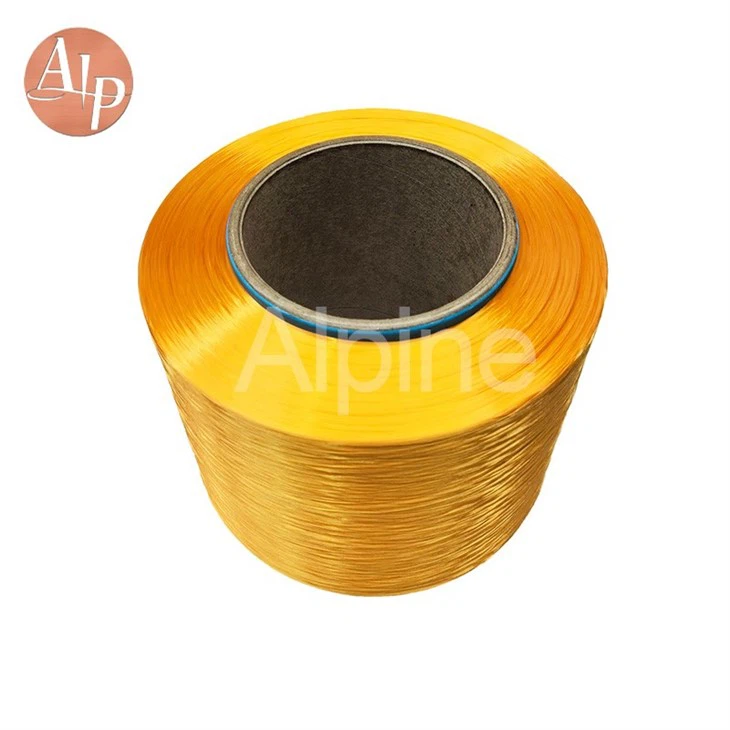
The manufacturing process also plays a role. The way the Polyester Fdy is spun, drawn, and heat - set can influence its final structure and properties, including the melting point. If the yarn is heat - set at a higher temperature during the manufacturing process, it might have a slightly higher melting point because the polymer chains are more tightly packed and more stable.
Why does the melting point matter? Well, it's crucial for a few reasons. In the textile manufacturing process, knowing the melting point helps in determining the appropriate processing temperatures. For example, when dyeing or finishing the fabric made from Polyester Fdy, the temperature needs to be carefully controlled. If the temperature gets too close to or exceeds the melting point, the yarn can start to melt, which will ruin the fabric.
In terms of end - use applications, the melting point is also important for safety. If the fabric is going to be used in an environment where it might be exposed to high temperatures, like near a heat source or in industrial settings, a higher melting point means the fabric is less likely to melt and cause a fire hazard.
If you're in the market for different types of Polyester Fdy products, we offer a wide range. Check out our Polyester Fabric Yarn. It's great for making all kinds of fabrics, from lightweight summer wear to heavy - duty upholstery. Our Polyester Chenille Yarn is soft and has a unique texture, perfect for creating cozy blankets and decorative items. And our Polyester Filament Yarn is known for its high strength and smooth finish, which is ideal for technical textiles.
When it comes to handling Polyester Fdy, there are some best practices to keep in mind. Always store it in a cool, dry place. High humidity can cause the yarn to absorb moisture, which can affect its properties over time. And when transporting it, make sure it's protected from extreme temperatures.
If you're thinking about using Polyester Fdy in your next project, I'd be more than happy to help. Whether you're a small - scale crafter or a large - scale textile manufacturer, we can provide you with the right type of Polyester Fdy for your needs. Just reach out to us, and we can discuss your requirements in detail. We can offer samples so you can test the quality and properties of our Polyester Fdy before making a large - scale purchase.
In conclusion, the melting point of Polyester Fdy is an important characteristic that is influenced by composition and manufacturing processes. It has significant implications for both textile manufacturing and end - use applications. If you have any more questions about Polyester Fdy, its melting point, or our product range, don't hesitate to contact us. We're here to help you make the best choice for your projects.
So, if you're interested in starting a procurement discussion, just drop us a line. We're looking forward to working with you and providing you with top - quality Polyester Fdy products.
References
- Textile Chemistry and Technology textbooks
- Industry reports on synthetic fiber production and properties