


Viscose filament yarn, a staple in the textile industry, has a rich and fascinating history. As a supplier of Viscose Filament Yarn, I've had the privilege of delving deep into its origin and understanding its journey from a scientific concept to a widely used textile material. In this blog, I'll take you through the story of how viscose filament yarn came into existence, its development over time, and its significance in today's textile world.
The Early Beginnings: A Scientific Quest
The story of viscose filament yarn begins in the 19th century, a time of great scientific and technological innovation. Scientists were actively seeking ways to create artificial fibers that could mimic the properties of natural fibers like silk. At that time, silk was a highly prized and expensive material, and there was a growing demand for a more affordable alternative.
In 1884, a French chemist named Hilaire de Chardonnet made a significant breakthrough. He developed a process to create an artificial silk from nitrocellulose, which he called "Chardonnet silk." Although this was not the viscose filament yarn we know today, it was a crucial step in the development of artificial fibers. Chardonnet's work laid the foundation for further research and experimentation in the field.
The Invention of Viscose
The actual invention of viscose filament yarn is credited to two English chemists, Charles Frederick Cross and Edward John Bevan, along with their collaborator, Clayton Beadle. In 1891, they patented a process for making a new type of artificial fiber from cellulose, which they named "viscose." The name "viscose" comes from the highly viscous solution that is formed during the manufacturing process.

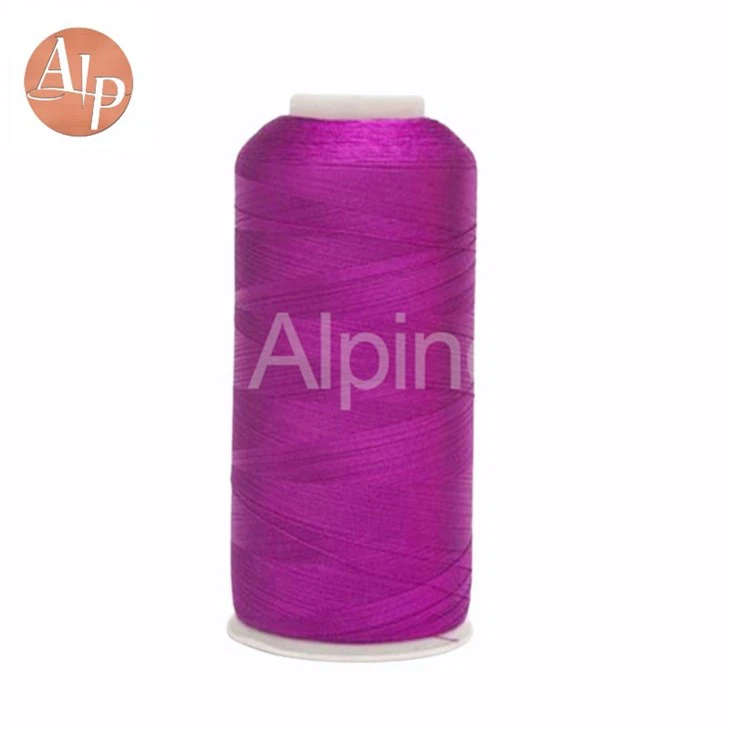
The viscose process involves treating cellulose, typically derived from wood pulp or cotton linters, with sodium hydroxide to form alkali cellulose. This is then reacted with carbon disulfide to create cellulose xanthate, which is dissolved in a dilute sodium hydroxide solution to form a viscous liquid. This liquid is then forced through fine holes in a spinneret into a coagulating bath, where the cellulose xanthate is regenerated into solid filaments of viscose.
Early Development and Commercialization
After the invention of the viscose process, there was a period of rapid development and commercialization. In 1894, Cross, Bevan, and Beadle formed the Viscose Syndicate Limited to exploit their patent. The first commercial production of viscose filament yarn began in the United Kingdom in 1905, and soon after, production facilities were established in other countries, including the United States, France, and Germany.
In the early days, viscose filament yarn was mainly used as a substitute for silk in the textile industry. It had a similar appearance and feel to silk, but was much more affordable. It quickly gained popularity among textile manufacturers and consumers alike, and its production increased steadily over the years.
Advancements in Technology
Over the years, there have been significant advancements in the technology used to produce viscose filament yarn. These advancements have led to improvements in the quality, strength, and versatility of the yarn.
One of the major advancements was the development of continuous spinning processes. In the early days, viscose filament yarn was produced using a batch process, which was time-consuming and labor-intensive. The continuous spinning process, introduced in the 1920s, allowed for a more efficient and continuous production of the yarn.
Another important advancement was the development of new types of viscose filament yarn. For example, high-tenacity viscose filament yarn was developed in the 1930s, which had improved strength and durability. This made it suitable for use in applications such as tire cords and industrial fabrics.
Viscose Filament Yarn Today
Today, viscose filament yarn is one of the most widely used textile fibers in the world. It is used in a wide range of applications, including apparel, home textiles, and industrial fabrics.
In the apparel industry, viscose filament yarn is popular for its softness, drape, and ability to absorb dyes. It is often used to make dresses, blouses, shirts, and lingerie. It can also be blended with other fibers, such as cotton, polyester, or wool, to create fabrics with different properties.
In the home textile industry, viscose filament yarn is used to make curtains, bed sheets, pillowcases, and upholstery. It adds a touch of elegance and luxury to home decor.
In the industrial fabric industry, viscose filament yarn is used in applications such as tire cords, conveyor belts, and filtration fabrics. Its high strength and durability make it suitable for these demanding applications.
Our Role as a Supplier
As a supplier of Viscose Filament Yarn, we are committed to providing our customers with high-quality products and excellent service. We have a state-of-the-art manufacturing facility that uses the latest technology and processes to produce viscose filament yarn of the highest quality.
We offer a wide range of viscose filament yarn products, including different deniers, twists, and finishes, to meet the diverse needs of our customers. We also provide customized solutions to our customers, based on their specific requirements.
In addition to Viscose Filament Yarn, we also offer Poly Viscose Yarn and Viscose Yarn for Knitting. Our Poly Viscose Yarn is a blend of viscose and polyester, which combines the best properties of both fibers. Our Viscose Yarn for Knitting is specially designed for use in knitting applications, and has excellent stitch definition and drape.
Contact Us for Procurement
If you are interested in purchasing Viscose Filament Yarn, Poly Viscose Yarn, or Viscose Yarn for Knitting, we would be delighted to hear from you. Our team of experts is ready to assist you with your procurement needs and provide you with the best possible solutions. Whether you are a small textile manufacturer or a large multinational company, we have the products and services to meet your requirements.
References
- "The History of Man-Made Fibres" by John Woodings
- "Textile Fibers: Identification, Testing and Analysis" by R. S. Blackburn
- "Viscose Fibers: Science and Technology" by R. M. Rowell and J. A. Youngquist