


Hey there! As a supplier of Fdy Yarn, I'm super excited to chat with you about what the packaging of Fdy Yarn is all about. So, let's dive right in!
First off, you might be wondering what Fdy Yarn is. Well, Fdy stands for Fully Drawn Yarn. It's a type of Polyester Filament Yarn that's widely used in the textile industry. Fdy Yarn has some great properties like high strength, good elasticity, and excellent color fastness. It's used to make all sorts of things, from Polyester Fabric Yarn for clothing to industrial fabrics.
Now, let's get to the main topic - the packaging of Fdy Yarn. The packaging of Fdy Yarn is super important. It's not just about making it look nice; it plays a crucial role in protecting the yarn during storage and transportation.
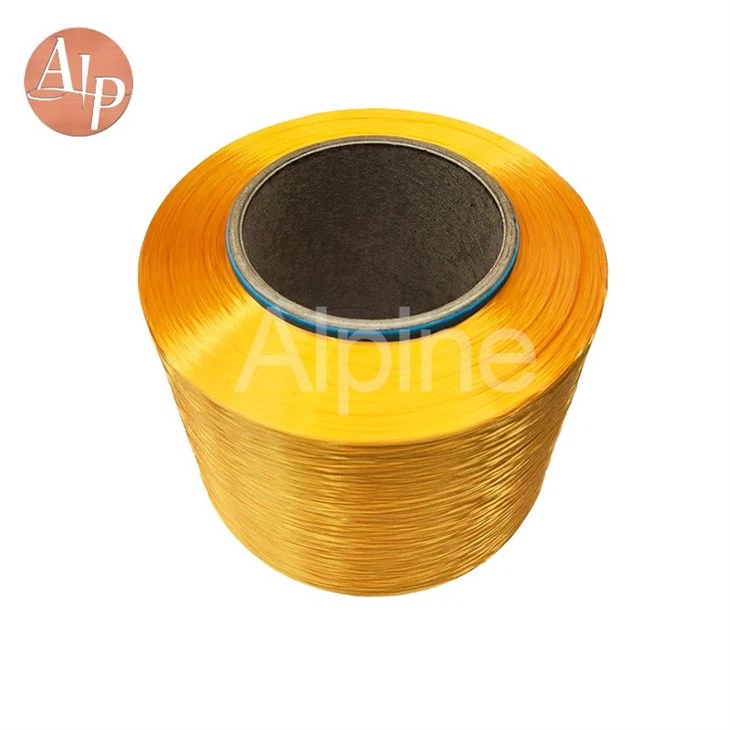
One of the most common ways to package Fdy Yarn is in cones. These cones are usually made of plastic or paper. Plastic cones are more durable and can withstand more handling, while paper cones are more eco - friendly. The yarn is wound tightly around the cone, which helps to keep it organized and prevents tangling. When you buy Fdy Yarn in cones, it's easy to use on knitting or weaving machines. You can just place the cone on the machine, and the yarn will unwind smoothly.
Another popular packaging option is in hanks. A hank is a loose coil of yarn. Hanks are often used when the yarn needs to be dyed or when it's going to be sold in smaller quantities. They're also easier to handle when you're doing hand - knitting or crocheting. The hanks are usually tied with a string at a few points to keep them from falling apart.
For larger quantities, Fdy Yarn can be packaged in bales. Bales are big, compressed packages of yarn. They're great for bulk shipping and storage. When the yarn is packed in bales, it takes up less space, which means lower shipping costs. But handling bales requires special equipment, like forklifts, because they can be quite heavy.
The packaging also needs to be able to protect the yarn from environmental factors. For example, it should be resistant to moisture. Moisture can damage the yarn, causing it to lose its strength and color. That's why many packages are sealed with plastic wraps or placed in moisture - proof bags.
UV protection is another important aspect. Exposure to sunlight can fade the color of the yarn over time. So, some packaging materials are designed to block UV rays. This ensures that the yarn arrives at its destination looking just as good as when it left the factory.
Let's talk about the labels on the packaging. Labels are super important. They provide essential information about the yarn, such as its denier (a measure of the yarn's thickness), the number of filaments, the color, and the lot number. The lot number is especially important because it allows you to trace the origin of the yarn in case there are any quality issues.
When it comes to branding, the packaging is also a great way to showcase your company. You can print your logo, company name, and contact information on the package. This not only helps with brand recognition but also makes it easy for customers to get in touch with you if they have any questions or want to place an order.
Now, let's think about the cost - effectiveness of the packaging. As a supplier, I always try to find the right balance between the cost of packaging and the protection it provides. Using high - quality packaging materials can increase the cost, but it also reduces the risk of damage to the yarn. On the other hand, using cheap packaging might save money in the short - term, but it could lead to more returns and customer dissatisfaction if the yarn gets damaged.

We also have to consider the ease of opening the packaging. Customers don't want to struggle to get to the yarn. So, the packaging should be designed in a way that it can be opened easily without damaging the yarn inside.
In addition to the physical packaging, we also need to think about the outer shipping containers. If the yarn is being shipped overseas, it will be placed in large shipping containers. These containers need to be sturdy and weather - resistant. They should also be able to stack safely to maximize the use of space on the ship or truck.
As a supplier of Polyester Fabric Yarn, I know that different customers have different needs when it comes to packaging. Some customers might prefer cones for their automated production lines, while others might need hanks for their artisanal projects. That's why we offer a variety of packaging options to meet the diverse needs of our customers.
If you're in the market for Fdy Yarn, whether you're a small - scale crafter or a large - scale textile manufacturer, we've got you covered. Our packaging is designed to ensure that the yarn reaches you in perfect condition, ready to be transformed into amazing products.
We're always looking for ways to improve our packaging. We're exploring more sustainable packaging options, like using biodegradable materials. We also want to make the packaging more user - friendly and cost - effective.
So, if you're interested in our Fdy Yarn, don't hesitate to get in touch. We can discuss your specific packaging requirements and find the best solution for you. Whether you need a small amount of yarn for a personal project or a large bulk order for your factory, we're here to provide you with high - quality Fdy Yarn and the right packaging to go with it.
Let's work together to create beautiful textiles! Reach out to us, and let's start this exciting journey of turning Fdy Yarn into something wonderful.
References:
- Textile Packaging Handbook
- Industry reports on Fdy Yarn packaging trends